Celebrating our Native Bees
I know it’s at the very top of all your holiday plans, so I’m sure we’re all eagerly anticipating the celebrations for World Bee Day on May 20.
Don’t worry, I’m totally kidding! I would be so surprised if you even knew that World Bee Day was a holiday, but it is an international celebration of pollinators and bees.
All joking aside, the conversation around any bee celebrations usually center on the honeybee. And, while those managed hives are vital for our global food supply, they are only a small part of the story.
In Florida, we have over 300 species of native bees. These local specialists have been pollinating our wildflowers and forests since long before the first hives arrived with European settlers in the 1600s.
THEY AREN’T LOOKING FOR A FIGHT
The biggest hurdle to enjoying native bees is the fear of being stung. But if you learn one thing about our native bee species, let it be this: the majority of them are “solitary.”
Being a solitary species, which is one that does not form a community hive and spends the majority of its life alone, means they are less likely to sting. Because they don’t have a hive to protect or a queen to defend, they tend to be incredibly docile. On the contrary, a paper wasp or even a honeybee might get defensive because it is protecting its family and its winter food stores. Now, to be clear, European honeybees are typically very tame as well. Their general lack of aggression is what makes them such a good species for commercial and hobby beekeeping.
Your best bet for observing our native bees is to find a flowering plant, make yourself comfortable, and keep as still as you can. You’ll see honeybees, of course, but you’ll also see a wide variety of solitary bees flitting about and visiting flowers. You may also see some bee-mimics, like hoverflies (family Syrphidae), that are also very important pollinator species.
MORE THAN JUST YELLOW AND BLACK
If you stop and watch a patch of flowers for five minutes, you will realize that the little cartoon bees we all drew as children is an over-simplification of what our bees look like. Our native bee species are some of the most beautiful insects in Polk County and also, vary widely in appearance!
Our native bees can be as small as a grain of rice or as large as the width of a quarter; fuzzy or almost bare; brown and red or metallic blue and green; if you can dream it – there is probably a bee somewhere in the world with that look.
Easy to Identify Native Bees:
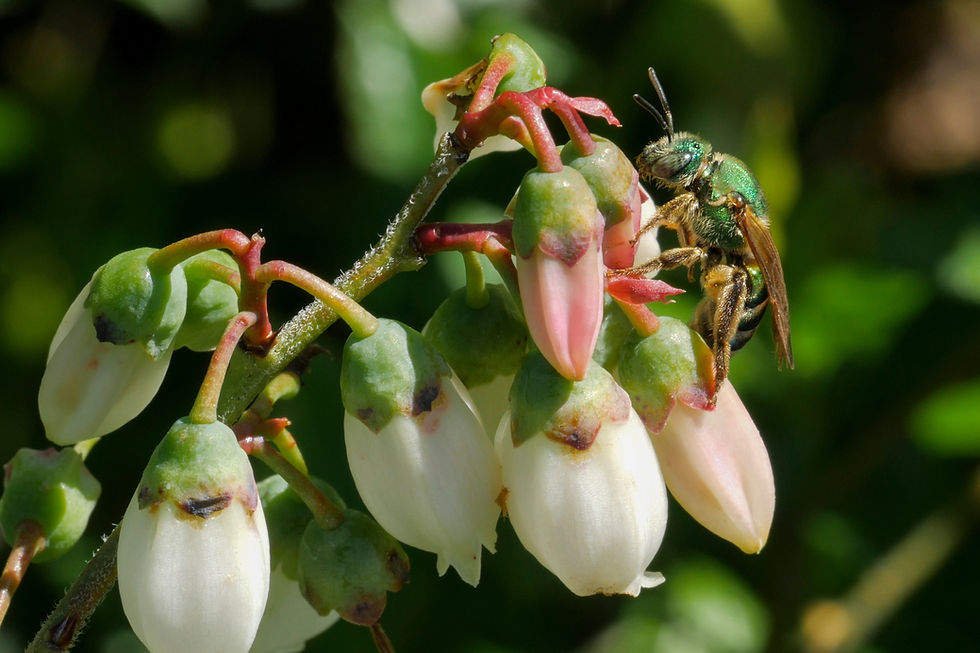
METALLIC GREEN SWEAT BEES: Sweat bees look like flying emeralds! They are small to medium sized and have a metallic sheen that catches the sunlight. I see them often on wildflowers, aquatic plants like pickerelweed and duck potato, and even on citrus blossoms.
EASTERN BUMBLEBEES: Bumblebees are LARGE and fuzzy. They can be quite scary to those who are unfamiliar with them due to their size, but they are a friendly species that are very charismatic if you stop to watch them. Note: These are a colony-forming species, not solitary.
LEAFCUTTER BEES: While they vary in size and color, the ones I see frequently are dark in color and have whitish stripes on the back of their abdomen. The easiest way to know you’re looking at a leafcutter bee is that they don’t carry pollen on their legs; instead, leafcutter bees carry pollen on the underside of their abdomen. It will look like they accidentally sat in a pile of pollen.
FINDING A HOME IN THE SAND
In Polk County, we are used to fighting against bare patches of sand in our lawns. However, that sand is prime real estate for about 70% of our native bees. While honeybees need a hollow tree or a man-made box, many of our natives dig tiny tunnels directly into the ground.
Others look for “cavities,” such as old beetle holes in dead wood or the hollow centers of dried plant stems. When we are too quick to clear out every dead branch or cover every inch of soil with thick mulch, we may unintentionally remove the neighborhoods where these bees live.
HOW TO HELP THE LOCALS
If you want to support the “wild ones” in your own backyard, the best thing you can do is actually do less work.
EMBRACE A LITTLE BIT OF BARE DIRT: Leave a few patches of sandy soil uncovered for the ground-nesters.
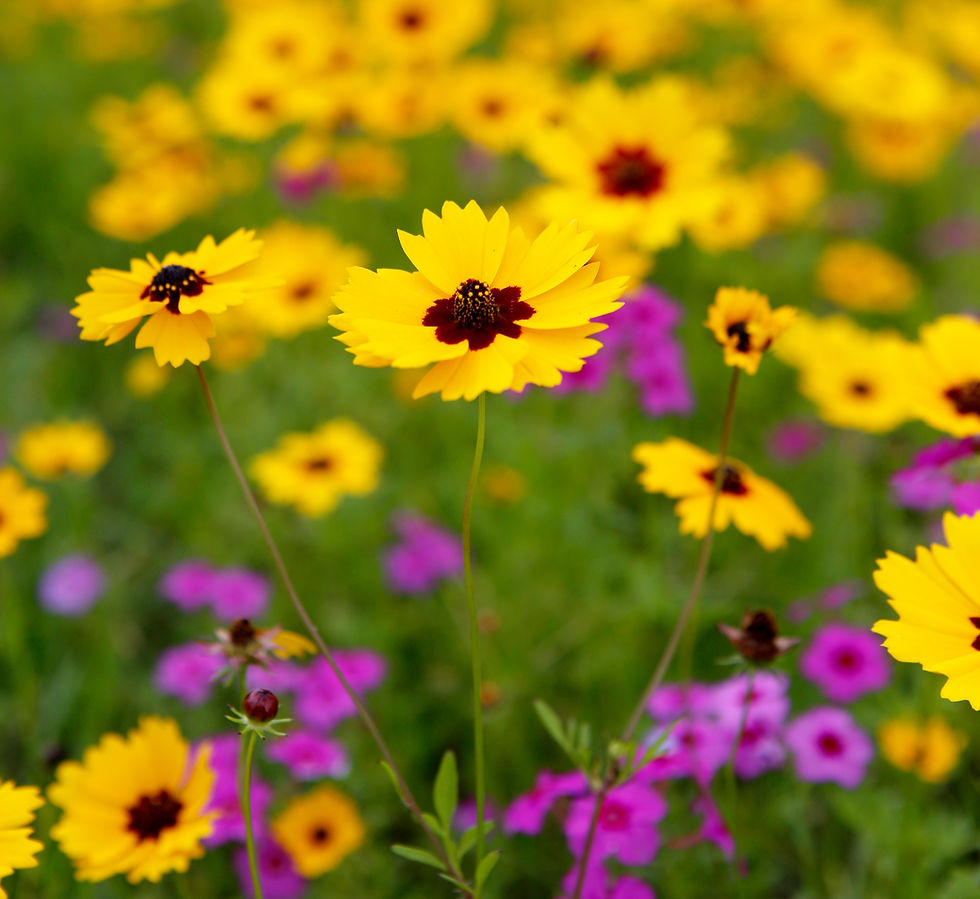
PLANT FOR SPECIALISTS: Choose native flowering plants like the passionflower, coreopsis, beggar ticks, or saw palmetto.
HOLD THE SPRAY: Many garden “pests” are actually food for other wildlife, and many general insecticides don’t distinguish between a caterpillar and a harmless native bee. If applying insecticides, try to find specific formulations for the pest you’re dealing with and focus on spot-treatments rather than fogging or spraying everywhere.
By shifting our focus away from the hive and toward these individual native bees, we can start to appreciate the diversity that keeps the Florida Heartland in bloom. Next time you see a flash of metallic green or a fuzzy bee working in your garden or near your picnic, take a second to watch and try to remain calm.
If you have questions about the bees in your yard or want to know which plants will attract them, the UF/IFAS Extension Office in Bartow is happy to help. You can reach us at 863-519-1041 or visit us online at https://go.ufl.edu/polk