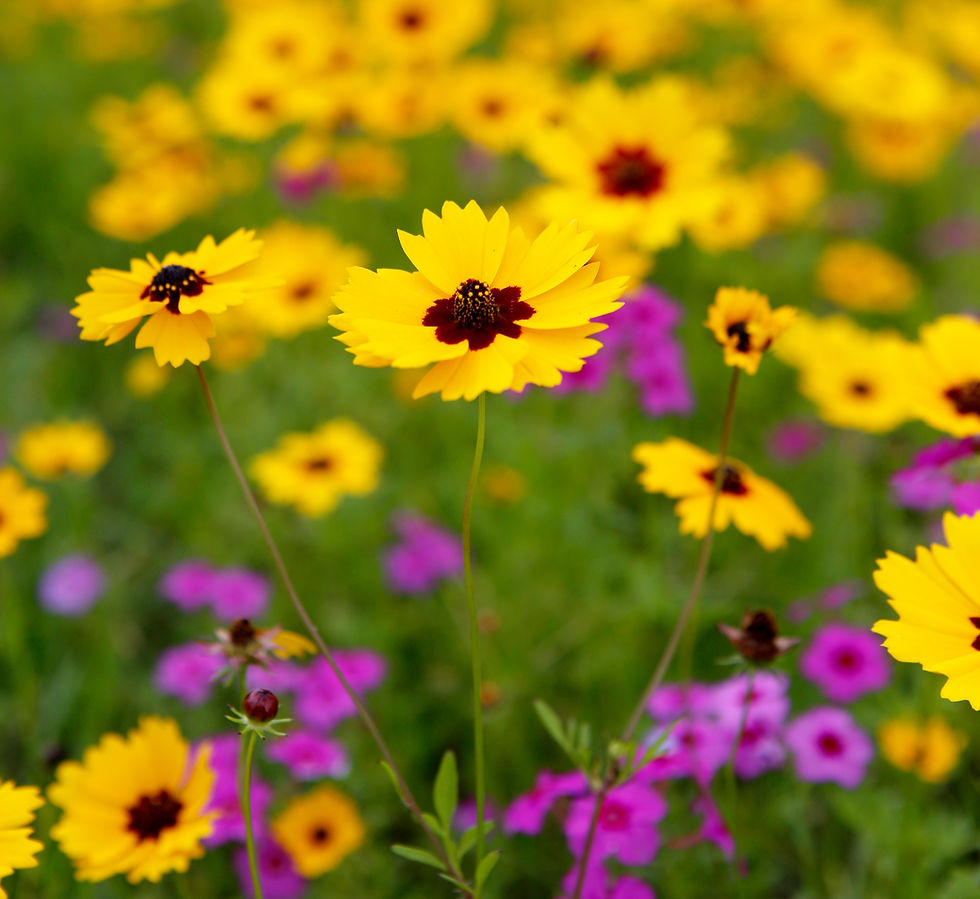
Fall Color in your Central Florida Yard
Your landscape might start to look a little stressed after a harsh Florida summer, but there are some plants that will revive the landscape going into the fall months. These plants will add some interest to your landscape with their unique characteristics. Blooms, berries, and fall-colored foliage are the key to fall landscaping in your Central Florida yard. Remember that even in Florida, there are many plants that will change color, produce berries, or flower only in the fall months. In fact, this is the best time of year for our native wildflowers and ornamental grasses. Try these plants for fall color in your central Florida yard:
GOLDENROD (Solidago sp.)
Goldenrod is a fall-flowering native perennial that grows tall and stands out in any perennial garden. The yellow flowers cover the plant from late summer through fall. Goldenrod will spread through the garden. It looks nice against a fence, combined with other wildflowers and perennials such as coneflower, pentas, and purple salvia.
BEACH SUNFLOWER (Helianthus debilis)
Beach sunflower blooms continuously from spring through the winter months, making it an attractive addition to a fall flower garden. This low-growing native plant will spread and readily re-seed itself in the garden. Combine beach sunflower with ornamental grasses such as muhly grass for a beautiful fall landscape bed.
CIGAR PLANT (Cuphea ignea)
The red-orange flowers of the cigar plant are perfect for a fall flower garden. The cigar plant will grow to about three feet tall and has dark green leaves. Plant this flowering perennial in a pollinator garden as it attracts butterflies and hummingbirds.
LION’S EAR (Leonotus leonurus)
Lion’s ear is another orange flowering plant for the fall garden. It will grow quite large, up to six feet tall and three feet wide. Combine lion’s ear with ornamental grasses, salvia, evergreen shrubs, and colorful flowering plants.
BEAUTYBERRY (Callicarpa americana)
In the fall, the clumps of bright purple berries of the beautyberry stand out in any garden. Beautyberry is a deciduous shrub that will grow to about six feet tall. This weepy, informal shrub can be grown in sun or shade gardens, woodland gardens, natural areas, or in bird and butterfly gardens. Combine beautyberry with evergreen shrubs.
MUHLY GRASS (Muhlenbergia capillaries)
Muhly grass is one of the most attractive fallflowering plants in Central Florida. The native grass produces gorgeous showy purple/pink blooms that rise above the foliage. Muhly grass is droughttolerant and only grows two to three feet tall and wide. Combine muhly grass with goldenrod, beach sunflower, and other perennials. It is also attractive when combined with evergreen shrubs.
OAKLEAF HYDRANGEA (Hydrangea quercifolia)
This large native shrub grows as an understory shrub, so it does best in shady areas under trees. The large oak-like leaves of the oakleaf hydrangea will turn red to purple in the fall, and the large white flowers are also showy during the fall months. The blooms start out white and turn pink. This shrub will grow six to eight feet tall and wide and are beautiful when combined with evergreen shrubs such as azaleas and grown under oaks and pine trees.
MEXICAN SAGE (Salvia leucantha)
The purple blooms of the Mexican sage start in the early fall and will continue to cover the plant until it freezes back in the winter. This large perennial can grow three to four feet tall and wide, so give it plenty of room to grow. The purple flowering plant looks beautiful when combined with ornamental grasses, yellow-flowering perennials, and evergreen shrubs such as coontie cycads.
FORSYTHIA SAGE (Salvia madrensis)
Everything about the forsythia sage is big. The plant can grow up to eight feet tall, and the blooms can get up to twelve inches long. Forsythia sage will bloom from fall until frost. The plant will freeze back to the ground in the winter. The yellow flowering plant is attractive when combined with purple flowering plants, pentas, ornamental grasses, and blanket flowers.
SILVER-LEAVED ASTER (Pityopsis graminifolia)
The silver-leaved aster is a low-growing native perennial. The silver-green foliage is a beautiful contrast to the yellow flowers of the plants. This is a tough native plant that can be combined with other wildflowers and perennials, ornamental grasses, and native drought-tolerant shrubs.
Look for these plants at your local nursery to add some fall color to your landscape.
To learn more about bringing fall into your yard, listen to our conversation on Your Central Florida Yard podcast episode 27. If you have any questions about fall color in your landscape, contact UF/IFAS Extension Polk County at 863- 519-1041 or visit us online at: sfyl.ifas.ufl.edu/ polk. The Plant Clinic is open Monday through Friday, 9 a.m. to 4 p.m. to answer your gardening and landscaping questions. If you are not in Polk County, contact your local UF/IFAS Extension Master Gardener Volunteer Plant Clinic.
Anne Yasalonis is the Residential Horticulture Extension Agent and Master Gardener Volunteer Program Coordinator for UF/IFAS Extension Polk County. Please contact her at anneanne@ufl.edu