The Wildflowers Among Us
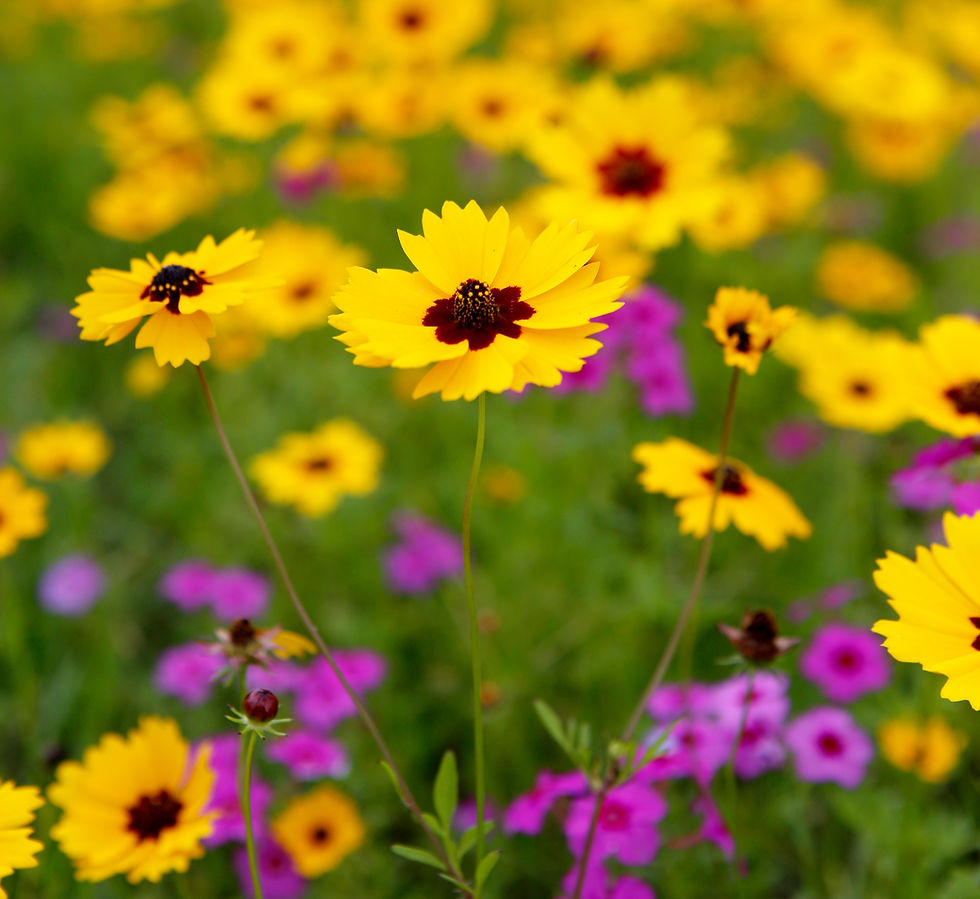
If you’ve driven through Florida and noticed bright yellow flowers waving along the turnpike or local highways, you may have spotted one of Florida’s most recognizable wildflowers: coreopsis.
The name “coreopsis” comes from the Greek words koris, meaning “bug,” and opsis, meaning “view.” The name refers to the buglike appearance of the plant’s fruit, whose tiny seeds have pincer-like structures that can grab onto clothing or fur. The common name for coreopsis is “tickseed” which is also used across many species in the Southeast and Florida.
WHAT DOES COREOPSIS LOOK LIKE?
Coreopsis plants typically have bright green laves and tall, mostly leafless flower stems that can reach one to three feet. This wispy appearance can make a field of them appear almost as if the tiny, happy flowers are just floating in the wind.
The flowers are usually yellow, although some species will have combinations of yellow, red, and orange. Swamp coreopsis (Coreopsis nudata) has beautiful pink petals, but it is only found in north Florida and Georgia. Individual flowers generally range from about half an inch to two inches across, and flowering can occur yearround. Flowering can vary with the weather, though; rainfall patterns, frost, and heat all play a role.
COREOPSIS AS FLORIDA’S STATE WILDFLOWER
In 1991, the Florida Legislature designated the genus Coreopsis as Florida’s official state wildflower. The designation followed decades of use of colorful wildflowers in roadside plantings and highway beautification efforts.
Florida’s relationship with roadside wildflowers goes back to the early 1960s. The Florida Department of Transportation began receiving calls about abundant red flowers growing along State Road 19/U.S. Highway 27 south of Tallahassee. When the Roadside Development Office investigated, staff discovered that the flowers were crimson clover (non-native) growing from sod purchased from a nearby cattle operation. The farmer had planted the clover as winter forage and to enrich the soil.
FDOT eventually began purchasing crimson clover seed and planting it along roadsides. In 1963, the department established its first statewide Wildflower Program. The goals included improving roadside aesthetics, increasing driver safety, and reducing maintenance costs.
Today, the program has evolved beyond simply planting flowers. FDOT increasingly recognizes the value of preserving naturally occurring stands of wildflowers and remnants of native plant communities along the more than 12,000 miles of roads it maintains. When managed appropriately, these roadsides can function as biological corridors, providing habitat for pollinators and other wildlife while reducing the need for frequent mowing.
That is particularly important in a rapidly developing county like Polk. Roadsides may not look like traditional conservation areas, but the plants growing along them can provide valuable habitat between larger natural areas. As Florida continues to experience habitat fragmentation, opportunities to pair habitat enhancement with infrastructure programs can become increasingly important for local species.
WHERE CAN I FIND COREOPSIS?
Florida is home to approximately 15 species of Coreopsis, including around 12 natives and three that are non-native. Many of the species occur primarily in North Florida and the Panhandle, but several can be found throughout Central Florida.
One of the most widespread is Leavenworth’s tickseed (Coreopsis leavenworthii). It occurs throughout much of the state and is almost entirely endemic to Florida, with its only known occurrences outside the state being in two Alabama counties. Florida tickseed (Coreopsis floridana) and coastalplain tickseed (Coreopsis gladiata) are among the other native species found in Central Florida.
The plants occupy a variety of habitats. Many native coreopsis species are associated with wet environments such as flatwoods, bogs, ditches, and the edges of wetlands. Others occur in drier habitats such as sandhills. Some species are quick to establish in disturbed areas, which helps explain why they can be found along roadsides and other altered landscapes.
Their flowers also provide food and habitat for wildlife. Coreopsis flowers attract pollinators, including native bees, butterflies, and other insects. Research has found that coreopsis was particularly attractive to small- and medium-sized native bees, including sweat bees and leafcutter bees.
HOW YOU CAN GET INVOLVED
For Polk County residents, growing coreopsis can be a simple way to add native habitat to a yard or garden. And October is a great time to sow some seeds or plant the ones you’ve purchased from a local native nursery.
Seeds can be sown from October through January in a sunny location. They should be planted shallowly; no more than about one-eighth of an inch deep. Once established, Leavenworth’s coreopsis is drought tolerant and may reseed itself and spread if conditions are right.
If you have a formal garden, keep in mind that coreopsis may reseed and spread when conditions are right. That can be a benefit if your goal is to create more habitat for pollinators and other wildlife, but it may not fit everyone’s preferred garden aesthetic. If you want a more contained planting, consider growing it in a pot. Apartment and condo residents can also enjoy coreopsis in containers, giving those without a yard an opportunity to add native plants and habitat to their outdoor spaces. Be sure to check whether the species you’re putting in a pot is a wetland species or a sandhill species before settling on a watering schedule.
There is also another way residents can support Florida’s wildflowers that doesn’t involve a green thumb! The Florida wildflower specialty license plate helps fund wildflower education, research and planting throughout the state. Each sale or renewal includes a $15 donation supporting this work.
Perhaps the next time you see a patch of yellow flowers along a Polk County roadside, you’ll look at it a little differently. Florida designated coreopsis as its state wildflower because of its beauty and its connection to the state’s roadsides. But its value goes beyond appearances.
By planting native wildflowers, supporting thoughtful roadside management and making room for pollinators in our communities, we can help ensure that Florida’s sunshine-colored flowers remain part of the landscape for generations to come.
For more information about native wildflowers and the role they play in our ecosystems, contact UF/IFAS Extension Polk County in Bartow or visit my webpage at go.ufl.edu/HAVENLKLD.