

Getting to Know the Wild Blueberries
- Shannon Carnevale
- Mar 30
- 4 min read
Drive past a blueberry farm in Polk County and it is easy to focus on the neat rows, irrigation lines, and heavy clusters of fruit. What often goes unnoticed is that these farms are rooted, both biologically and historically, in a much older story. Long before cultivated blueberries were bred for Florida’s climate, native species in the genus Vaccinium were already thriving across our natural landscapes.
If you’ve spent any time walking through a preserve or natural area in Polk County, chances are you’ve passed a native blueberry without realizing it. They don’t stand out the way large trees or bright wildflowers do. Most stay low to the ground, blending in with other shrubs. But once you know what to look for, you’ll start seeing them everywhere.
Think of these natives as the rugged, outdoor cousins of those farm-grown berries. While they share a branch on the family tree, the wild versions are built a little differently. They’re smaller, scrappier, and perfectly adapted to handle Florida’s unique sandy soils and the change from our summer rain season to our long dry seasons.
NOT JUST ONE KIND OF BLUEBERRY
When people hear “blueberry,” they usually picture the large berries from the grocery store or from a local U-Pick. What they may not think of are the dozens of native blueberry species growing wild across North America or the eight to ten species native in Florida.
A cool feature of our many Vaccinium species is that they are all technically edible. None of the true blueberries are known to be poisonous, which is unusual when you think about how many wild berries are off-limits. Still, in natural areas, picking plants or fruit is often not allowed, so these are best enjoyed with your eyes. Also (and you didn’t hear it from me) they don’t always taste great. Some are delightfully sweet, but others are mealy or tart, and they can cause an upset stomach if you eat too many. Think of our wild blueberries as a buffet for wildlife, not humans.
Here in Polk County, many native blueberries stay low, sometimes only a foot or two tall. Others, found in different parts of the state, can grow much larger. One such example is sparkleberry (Vaccinium arboreum) which can reach the height of 20 feet or more and have a crown 10-15 feet wide! It can look very different from the small shrubs most people expect to see when looking for blueberries.
THE ONES YOU’RE MOST LIKELY TO SEE
Two species show up frequently in Polk County natural areas and can be seen in flower or beginning to fruit, now. Both species prefer acidic soils and they can be found growing side-by-side in many areas of Polk County.
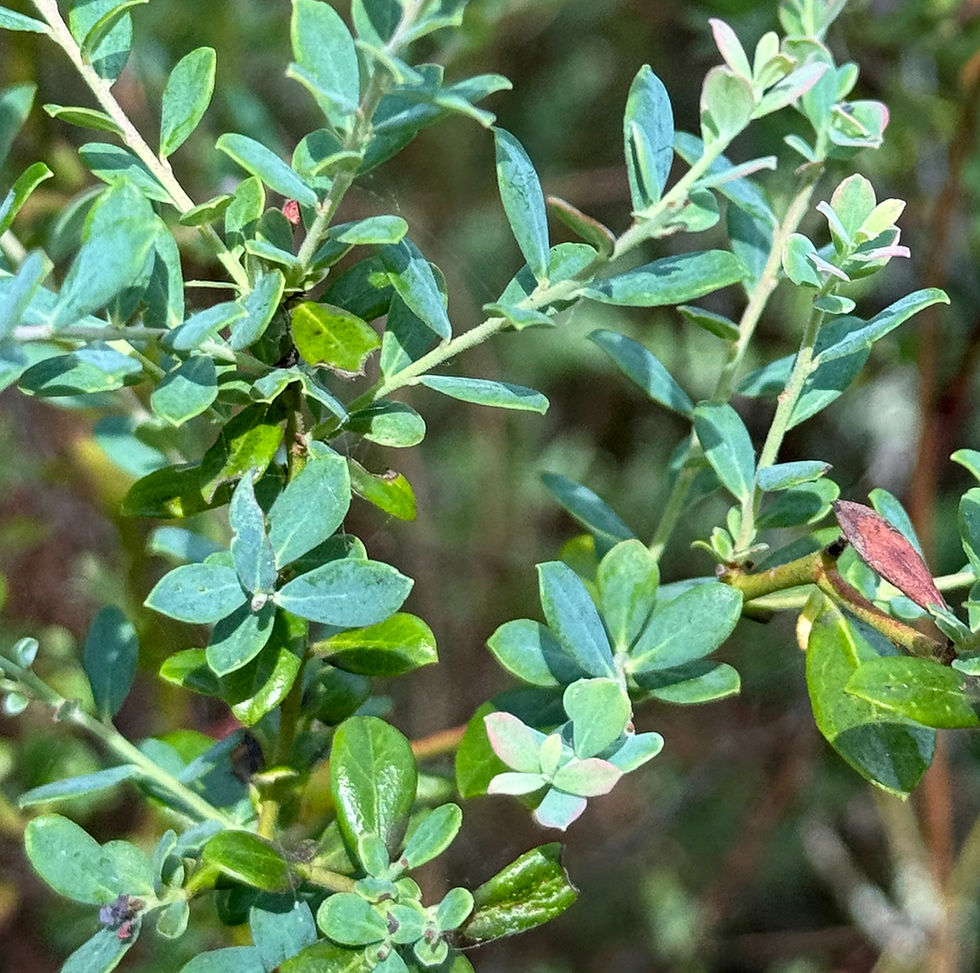
Darrow’s blueberry (Vaccinium darrowii) is easy to miss at first. The leaves will tend to look light blue or even purple, like they are covered in a pastel filter. It can tolerate drier conditions than shiny blueberry prefers and can even be seen growing on and around our ridges and sandhills.
Shiny blueberry (Vaccinium myrsinites) has darker leaves with a noticeable shine, hence the name! It often forms thicker patches than Darrow’s blueberry, especially along the edges of open areas. It can tolerate wetter soils than Darrow’s, like you might find in piney flatwoods or near seasonal wetlands but still prefers them to be welldraining and sandy.
Both species bloom early in the year, usually late winter into early spring. The flowers form in small clumps and are shaped like tiny bells, just like the commercial varieties but smaller! Those smaller flowers produce fruit that is much smaller than what you would find in a store, but just as important to the wildlife that depend on them.
If you love the look of these adorable little blueberry plants, you can use them in home landscaping. Both are available from area nurseries, especially our native plant nurseries. They can add amazing texture and wildlife forage to your home garden or landscape beds for yearround interest. Once established, they are quite drought tolerant; just like the ones found in our natural areas.
If you’re interested in adding some Darrow’s blueberry or shiny blueberry to your yard, find them at a local native plant nursery by visiting www.plantrealflorida.com
WHY WILDLIFE DEPENDS ON THEM
When these plants produce berries, native blueberries become a favorite food source for a wide range of animals. Birds eat them and help spread the seeds. Mammals like raccoons and foxes will also take advantage of them when they are in season. They provide a valuable early-season food source for many of our favorite wildlife species.
The plants themselves also provide cover. Their low, dense growth gives smaller animals a place to hide or nest. This is especially true for shiny blueberry. Its dense thickets provide excellent cover for small species of birds, lizards, insects, and more.
As I’ve discussed in earlier articles, occasional fire is natural here and helps maintain the habitats where native blueberries thrive. To protect this natural food and shelter source for wildlife, we can all play a part by understanding and supporting the use of prescribed fire to maintain these local ecosystems.
WHY THEY MATTER
These plants may not be as noticeable as larger species, but they are part of the plant communities that define Polk County’s natural areas. They create structure, produce forage for native pollinators and wildlife, and even provide shelter to our smallest critters.
If you are interested in learning more about native plants or how they fit into your own landscape, the UF/IFAS Extension Office in Bartow is a good place to start. Our plant clinic can help recommend species for your landscape, and I can answer questions about how those species relate to our regional ecology. For more information, visit us in Bartow or give us a call at 863-519-1041. You can also visit us online at go.ufl. edu/polk.


